


Can we create an influence in our home that supports the goals of our yoga practice?
The Vedic tradition can teach us how. Our homes should nourish and harmonize with
our physiology. After all, they’re an extension of it. This is the essence of Vastu home
design—a science that aligns our living spaces with the natural world to enhance
wellbeing.
How can they nourish and harmonize with our body? Our physiology is controlled by our
brain, and brain activity is affected by the direction one faces. Several studies have
established that neurons of the thalamus, deep in the brain, communicate differently
when one faces different directions. The thalamus is the real mind-body
connection—the intermediary between the higher brain and the body, as well as the
controller of our limbic system, which regulates aging, growth, and response to stress.
This principle is foundational to Vastu building design, where orientation plays a critical
role.
This is why there is a best direction to face when doing yoga/meditation/prayer as well
as working, or sleeping, and all our most routine activities. Published research
demonstrates that the direction in which we sleep correlates with our incidence of
depression and anxiety. The best direction to face is top of the head to the east, the
direction of the rising sun, the direction the surface of the earth is traveling, the direction
from which the celestial forces approach us every day. In Vastu design, aligning
ourselves with this eastward influence optimizes our mental and physical health.
Because the house is an extension of our body, the orientation of our home or
apartment building affects our mind and body. Again, east is best, and the ancient Vedic
texts say that south is the worst—it is associated with all negative influences, with
problems and suffering. Studies validate that those who live in south-facing homes have
worse mental health, are more likely to be under the care of a cardiologist and are even
less prosperous. We want the physiology of our homes to resonate with the physiology
of Planet Earth to avoid these damaging influences. Even east light in our homes—from
east-facing windows—improves our health, a key feature of Vastu architecture.
Everyone experiences that the sun generates different energies at different times of the
day. Yoga for the home, rooted in Vastu home design, tells us to lay out our home or
apartment so that the different energies of the sun correspond to the primary function of
each room. Then natural law will support our activity. In other words, there is a best
place in the home for cooking, which is best done in the southeast where the
transformative power of the metabolizing process is greatest. We benefit from
meditating and doing hatha yoga in the northeast, where the power of transcendence
will enhance our practice.
When we live in such a home, designed with Vastu house design principles, we live in
harmony with natural law on a deep structural level, and the result is an influence of
good physical health, happiness, family harmony, success in our actions, and growth to
enlightenment.
I’m an architect who has been practicing yoga and meditation daily for most of my life,
so it was inevitable that I would spend years searching for the connection between
building design and the inner peace that yoga cultivates. I discovered the connection
when I learned that the Indian sage Maharishi Mahesh Yogi was reviving the ancient
system of Veda-based architecture, which we know now as Maharishi Vastu®
architecture. (Vastu is a Sanskrit term that refers to the qualities of balance and
coherence that are maintained in the structures of nature.) I’ve been studying and
practicing this system for twenty-five years, and I’ve found that the Vedic texts give us
powerful guidance to create yoga for our homes through the science of Vastu
architecture.
By far the most powerful effects are gained by building a new home that incorporates all
the principles I’ve outlined above, and many more. We’ve had hundreds of clients now,
and yes, they have the wonderful experiences that the Vedic literature predicts with
Vastu-compliant architecture.
But the most universal comment that families who live in Maharishi Vastu homes make
is that they feel more at home in their new home than they ever felt in a home before. I
think what causes this experience is that a Vastu home is an expression of the same
deep levels of natural law that organize human physiology—Vastu really is yoga for the
home, achieved through Vastu home design.
People often ask me what can be done to integrate the effects of Vedic architecture into
an existing home or apartment. We can only experience the full effects from a house
designed for Vastu from the ground up, but if an existing house faces one of the
cardinal directions, anyone can do a few valuable things:
Sleep with your head (pillow) to the east or south.
Use only the east or north doors to enter the building.
Do yoga and meditation in the northeast.
Sit facing east or north for work or study.
What I’ve found is that by far the best is to live and practice yoga in a home or
apartment building that was built according to the holistic approach of Maharishi Vastu,
which harmonizes all the inner and outer energies. This creates an influence of peace,
health, happiness, and enlightenment—the fulfillment of yoga—through Vastu principles
for home design.
Reference:
Maharishi Mahesh Yogi is best known for bringing the Transcendental Meditation
technique (TM) to the West, and more recently as the inspiration behind the David
Lynch Foundation. It is less well known that starting in 1960 he taught hatha yoga to
many of those who learned TM, and through his programs hundreds of thousands in the
US have learned yoga. Subsequently, he brought the holistic, natural healthcare system
Ayurveda to the West, and in the 1990s introduced Sthapatya Veda or Vastu to the
West. Roughly $500,000,000 in Maharishi Vastu homes and larger buildings have been
built in the US using Vastu architecture. For more information, and to download
information on the research mentioned in this article, see www.MaharishiVastu.com or
contact info@MaharishiVastu.Org.
BIO:
Jon Lipman, AIA has been practicing meditation since 1971 and hatha yoga since 1974.
He has been practicing Maharishi Vastu architecture exclusively since 1997 and is the
director of www.MaharishiVastu.com He is an award-winning architect, a New York
Times-recommended author, and has lectured at Harvard, Yale, and Stanford
Universities. He also gave Oprah a televised tour of a Maharishi Vastu home for
Oprah’s New Chapter.
The Power of Vastu in Community Living
Words like “coherence,” “protection,” and “harmony” frequently describe life in a
Maharishi Vastu home. When you live in a Vastu-planned community, these qualities
are amplified by the presence of surrounding structures, all designed with Vastu
principles to align with natural law. The synergy of Vastu homes creates an environment
that promotes well-being, creativity, and balance. As the saying goes, “The whole is
greater than the sum of its parts,” and this perfectly captures the transformative
experience of Vastu community living. Through precise Vastu planning, these
communities foster a collective consciousness that elevates daily life.
North Campus Village: A Vastu Success Story
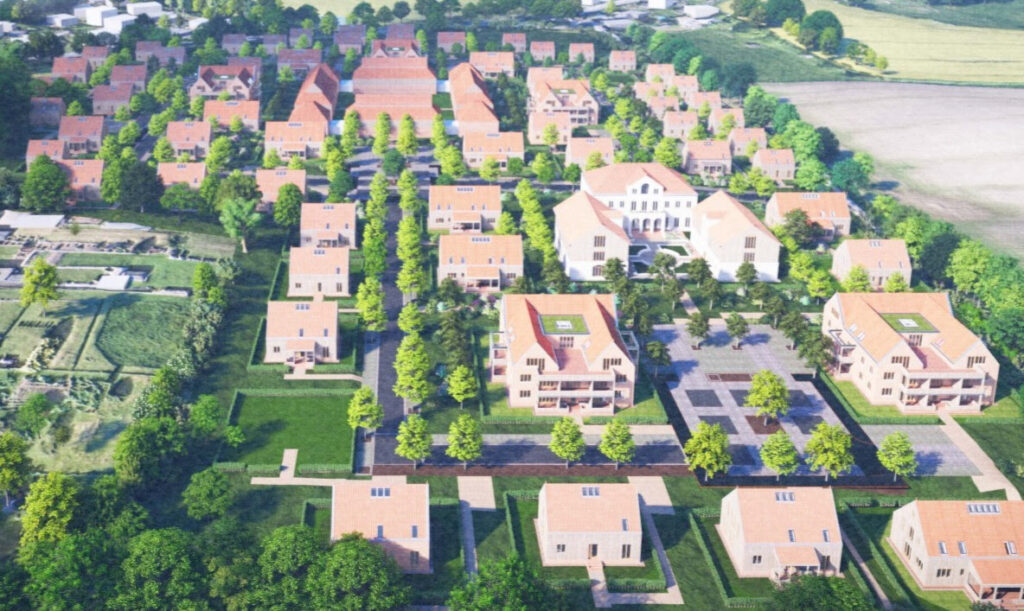
North Campus Village exemplifies the power of Vastu planning. Phase 5, completed in
2021, introduced 21 Vastu, triplex townhouse buildings, adding to the community’s growing footprint. By 2027, North Campus Village will boast over 200 Vastu residences,
solidifying its status as a model for Vastu community design.
The Vastu principles of orientation, proportion, and placement guide every aspect of
North Campus Village’s layout, just as they shape individual Vastu homes. This
meticulous Vastu planning ensures that homes and communal spaces harmonize with
the environment, fostering peace and vitality for residents.
While Maharishi Vastu has traditionally focused on single-family homes, Vastu
architecture has evolved to meet modern housing trends. Builders now offer Vastu-
designed townhomes, apartments, and condominiums, reflecting the growing demand
for diverse Vastu living options. A prime example is North Campus Village in Fairfield,
Iowa, a global leader in Vastu communities. Located adjacent to Maharishi International
University, this vibrant Vastu-planned neighborhood is the world’s largest collection of
Vastu residences and continues to expand rapidly.
Voices from the Vastu Community
Residents of North Campus Village share glowing testimonials about their Vastu living
experiences. One early resident reflects, “I feel safer and more nourished here than
anywhere else I’ve lived. When we moved in, open fields surrounded us, and I
cherished the space. But as each new Vastu home was built, I felt a growing sense of
community consciousness. Now, I’m thrilled every time a new Vastu residence joins our
neighborhood.”
A couple, formerly from Long Island, who have lived in a Vastu townhome for over three
years, describe their experience: “Our Vastu home feels boundless, like being
immersed in nature’s beauty. It’s joyful and relaxing, supporting clear thinking and
confident decisions. This Vastu-designed space is like a trusted friend, always uplifting
us.”
A mother of three adds, “Since moving into our Vastu home, my sleep has been
remarkable. Around 9 p.m., a gentle energy encourages rest—I can barely keep my
eyes open! Even on nights with less sleep, I wake refreshed, thanks to the deep
restfulness of our Vastu environment.”
Economic and Community Impact of Vastu
The expansion of North Campus Village has brought significant economic benefits to
Fairfield. Phase 5, valued at $8 million, boosted local commerce, and Phase 6 has
attracted further investment. Fairfield’s city council, recognizing the value of Vastu
development, secured government tax incentives for Phase 6, allowing Vastu
townhomes to be sold at competitive prices. In 2024, the Fairfield Chamber of
Commerce honored Vastu Partners and DRB Contracting Inc. with its Economic Impact
Award, celebrating their contributions to the region’s growth through Vastu planning.
Why Choose a Vastu Community in 2025?
The rise of Vastu communities comes at a time when people crave sustainable,
wellness-oriented living. Vastu planning aligns perfectly with 2025’s focus on eco-
friendly design, mental clarity, and community connection. Unlike conventional
neighborhoods, Vastu communities prioritize natural materials, optimal orientations, and
green spaces, creating environments that nurture both individuals and families.
North Campus Village’s success highlights the scalability of Vastu architecture. Whether
you’re drawn to a Vastu townhome, apartment, or single-family home, these
communities offer diverse options tailored to modern lifestyles. Vastu planning ensures
every residence supports health, happiness, and harmony, making it an attractive
choice for today’s homebuyers.
Take the Next Step with Vastu
Living in a Maharishi Vastu community is more than a housing choice—it’s a lifestyle
transformation. The principles of Vastu architecture, applied through expert Vastu
planning, create spaces where residents thrive. If you’re inspired to explore Vastu living,
North Campus Village offers a glimpse of what’s possible, with new Vastu homes
available for those ready to join.
Ready to experience the harmony of a Vastu community? Contact Vastu experts to
learn about available Vastu plans, explore North Campus Village, or start designing
your own Vastu home. In 2025, there’s no better time to embrace the timeless wisdom
of Vastu for a brighter, more balanced future.

