


Maharishi Vastu® Architecture
The ancient Vedic texts of Manasara and Mayamata explain in detail how influences
can be designed and constructed into a building to improve our quality of life. This
knowledge is known in Sanskrit as Sthapatya Veda, which translates literally as “the
knowledge of establishment,” and is translated poetically as “the architecture of nature.”
When the technologies that derive from this ancient science are applied to the design
and construction of buildings and cities, it is known as Vastu. As with the ancient
science of Ayurveda, Maharishi organized a research project beginning in the 1980s
and spanning almost 20 years to reconstruct the technology of Vastu, such that it would
faithfully reflect this ancient science. His restoration of this subject, as with Maharishi
Ayurveda, is identified with his name — thus the term “Maharishi Vastu ®” architecture.
To date, over $500 million in new building construction has been accomplished using
Maharishi Vastu architecture, with inhabitants reporting improved quality of life, a feeling
of peacefulness and greater family harmony as chief results.
This system of Vastu architecture derives in part from the most basic characteristics of
our planet: the Earth is a sphere rotating from west to east on an axis that passes
through the North and South Poles. The axial rotation of our planet causes all celestial
objects to pass overhead from east to west. Therefore, the influences of the Sun and
virtually all other celestial bodies come at us from the east. From this simple
observation, Maharishi Vastu identifies six key elements relevant to building orientation,
furniture and room placement, architecture, and city planning, making it an ideal
framework for Vastu home design:
- Building Orientation: The buildings we occupy are intermediaries between us
and the cosmos. The directional orientation of where we live, work, and frequent
affects our wellbeing, a principle central to Vastu house design. The ancient texts
describe various impacts of orienting buildings toward each of the four cardinal
directions and the four intermediary directions. For example, a south-facing
entrance is thought to bring strife and suffering. A home, after all, is not an inert
object but greatly influences the health and happiness of those who reside within
it. In a study published in the Journal of Affective Disorders, it was found that
bipolar inpatients in west-facing rooms had a mean 3.67-day longer hospital stay
than patients in otherwise identical but east-facing rooms, where they were
exposed to direct sunlight in the morning. Another study found that homes with
south-facing entrances were significantly more likely to be burglarized than those
with east-facing entrances, while their occupants were more likely to experience
mental illness and financial poverty. The Vedic texts, foundational to Vastu
architecture, propose that there is an especially beneficial effect from exposure to
eastern light, especially around the time of sunrise. Ample windows on the east
of a building — a key aspect of Vastu house design — expose the occupants to
the day’s early light as much as possible.
- Human Orientation: For most of our primary activities (working, sleeping,
eating), it is ideal to face east. Other orientations will have inferior and often
negative influences on our activities. A recent study by leading brain researcher
Dr. Fred Travis has demonstrated the effect of head orientation on brain
coherence and task performance, aligning with Vastu principles for home design.
The study found that:
a. Average time to complete the puzzles was shorter when facing east, then
north, then west and south.
b. Brain coherence while completing the puzzles was greatest when subjects
were facing east, next north, and last, west and south, as predicted by the
Vedic texts.
Here is the reference to the study: F. Travis, J. Lipman, N. Parim, P. Hodak, and J.
Leete, EEG Patterns and Performance when Facing the Cardinal Directions,
International Journal of Psychological Studies (2021), 13:2.
- Room Placement: The Sun has the most powerful influence on us and all life on
Earth. Simple observation and a body of published, peer-reviewed research tell
us that the Sun generates differing qualities of energy at different times of day.
Maharishi Vastu architecture recommends that buildings should be designed so
that the different energies of the Sun complement and support the specific
function and activity of each room, a core tenet of Vastu for home design. - Proportion and Measurement: Proportion is a key to successful design in
nature. Maharishi Vastu uses ancient mathematical formulas to determine the
various room dimensions, proportions, and building heights to gain greater
symmetry and harmony with the natural world, ensuring a Vastu-compliant
architecture. - Site Influences: The Vedic texts also propose that the nourishing effects of
orientation, placement, etc., can be magnified or diminished by environmental
features. For example, a hill to the east will block the positive influence from the
east and therefore should be avoided. Similarly, the slope of the land and
placement of water bodies can have either beneficial or negative influences, a
consideration critical to home design in the Vastu tradition. - Holistic System: There are many secondary influences described in the Vedic
literature on Vastu. To derive full benefit, none of these influences should be left
out of consideration. Results come from the influence of the whole rather than
from individual parts, making Vastu architecture a comprehensive approach for
new construction.
Maharishi Vastu advises that managing the above six elements correctly in the design,
construction, and siting of a building will spontaneously promote positive influences for
the occupants. Modern research to date supports this hypothesis, reinforcing the value
of Vastu house design.
However, if you’re not quite ready or able to build a new home yet, and you have
determined conclusively that your house is aligned with the cardinal directions (that is,
true north-south, east, and west), then the following may be helpful tips until you can
consider building with Vastu for home design:
Sleep with your head to the east (or south if health is delicate).
Use ONLY doors that open to cardinal east or north.
Increase access to natural light, especially eastern light.
The northeast corner of your home should be a quiet place to support more self-
referral experience through your daily practice of yoga, meditation, or prayer.
Favor natural, non-toxic materials within your home. Avoid chemical
contaminants, plastics, and synthetics.
The Ceremonies of Maharishi Vastu Construction
The first milestone, Bhumi Khanaman, or breaking the ground, is a pivotal moment in
Vastu house design. The owner initiates the first movement of earth on the site,
symbolizing the start of construction and a commitment to steward the land responsibly.
This act, guided by Vastu plans, fosters a harmonious relationship between the Vastu
home and its environment.
The second stage, Shilanyas, or the foundation stone ceremony, occurs at the start of
construction of the foundation. This ritual, a fundamental of Vastu planning, marks the
true beginning of construction of the building. Specific elements are placed in an
auspicious location within the foundation, as dictated by Vastu plans, to establish a
strong connection between the Vastu building and the earth, ensuring stability and
prosperity.
Finally, the Griha Pravesham, or inauguration of the new Vastu home, is a vibrant
celebration where family and friends gather to bless the completed space. This
ceremony enlivens the natural forces that support the occupants’ health, happiness, and
success, aligning with the principles of Vastu home design to create a nurturing
environment.
A Cape Cod Vastu Home: From Foundation to Celebration
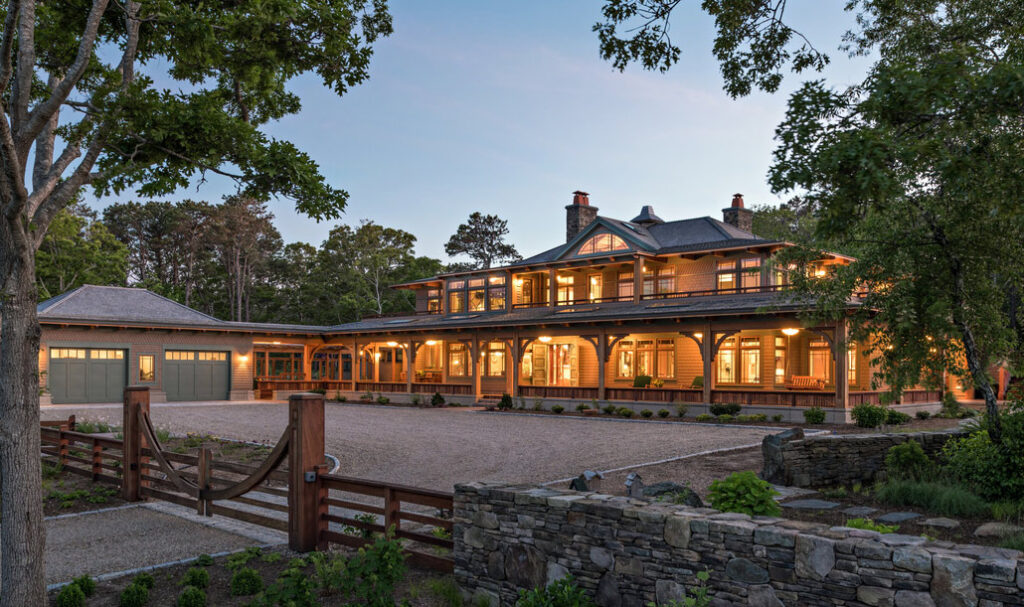
A recently constructed Maharishi Vastu home on Cape Cod, Massachusetts,
showcases the beauty and intention behind these ceremonies. Captured in photographs
from its foundation stone ceremony to its inauguration, the home reflects the artistry of
its owners, builder, and design team. The completed Vastu house design embodies
core principles of Vastu planning: abundant natural materials, optimized natural light
and airflow, and refined decorative elements that create a cohesive, elegant, and
comfortable whole.
The owners’ reflections on their first weeks in the Vastu home highlight the
transformative impact of Vastu home design. “The house has Being,” they shared. “It is
grounding. I sleep better. I feel more at home. I feel symmetry, an empathy with the
space. It feels alive. The energy feels good, settling. I am more creative and fulfilled
being here.” They praised the home’s openness, with light streaming through
clerestories and carefully designed avenues, as well as its use of natural materials and
geothermal heating, which aligns with Vastu principles to minimize environmental
impact. The surrounding walls and fences, integral to Vastu plans, provide a sense of
protection and grounding, enhancing the sanctuary-like quality of the Vastu home.
A Space That Inspires and Uplifts
The owners expressed joy in how the Vastu home nurtures everyone who enters.
“People who have visited are blown away by not only the beauty of the space, but also
by the way it feels being here,” they said. The Vastu house design, which incorporates
considerations like reducing electromagnetic interference, fosters an environment where
plants, family, and guests thrive, a testament to thoughtful Vastu planning.
The construction process deeply impacted the builders, who described the Vastu project
as a career pinnacle. They felt challenged to deliver their best work, guided by the
precision of Vastu plans. The owners hope this will not be the builders’ final Vastu
project, envisioning more homes that embody the harmony and beauty of Vastu home
design.
A Tradition of Meaningful Creation
The ceremonies of Bhumi Khanaman, Shilanyas, and Griha Pravesham are more than
rituals; they are moments of connection—between people, the land, and the spaces
they inhabit. The Cape Cod Vastu home stands as a testament to the power of Vastu
house design and Vastu planning, creating a space that not only shelters but also uplifts and inspires. Through these celebrations, the ancient wisdom of Vastu architecture continues to enrich modern lives, fostering Vastu homes that are as nurturing as they are beautiful.

